
Leverage Local Business Listings to Attract New Customers
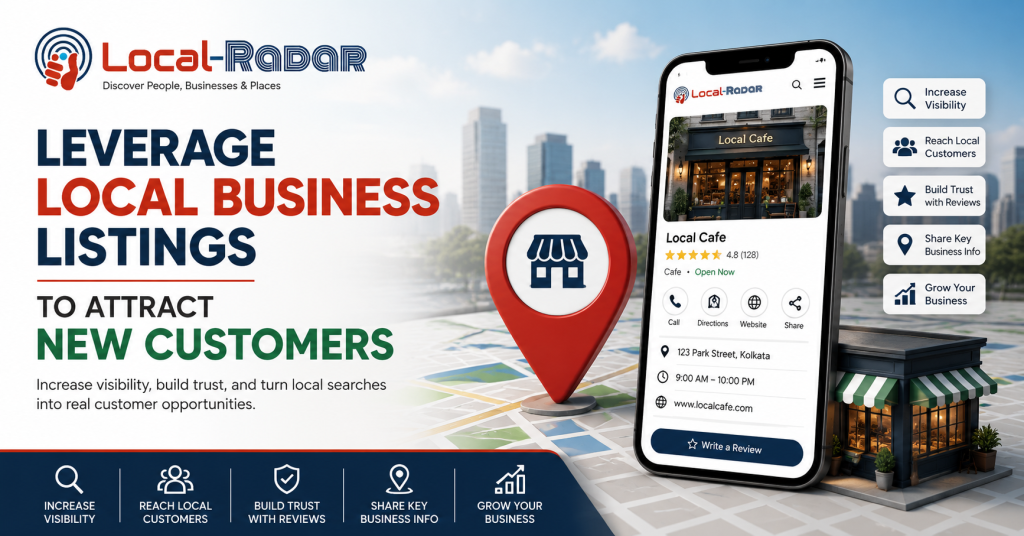
In today’s digital-first marketplace, being a great local business is only part of the equation. Customers also need to be able to find you easily when they are searching for the products or services you provide.
Whether you operate a restaurant, salon, healthcare clinic, retail store, construction company, real estate agency, professional service, or home-service business, local visibility can have a direct impact on your ability to attract new customers.
This is where local business listings become an important part of your digital marketing strategy.
Platforms such as Local Radar give businesses an additional opportunity to showcase their services, business information, location, and contact details in a place where people are actively looking for local businesses.
What Is a Local Business Listing?
A local business listing is an online profile that contains essential information about a business. This typically includes the business name, address, phone number, website, operating hours, category, services, photos, and other useful details.
Think of it as a digital version of a traditional business directory—but with much greater potential.
Instead of customers searching through a physical directory, they can search online for businesses in their city, neighborhood, or service area.
For example, someone might search for:
- “Best restaurants near me”
- “Dentist in Kolkata”
- “Digital marketing agency in Mumbai”
- “Plumber near me”
- “Real estate company in Delhi”
- “Best salon in Bangalore”
When your business has a complete and accurate online presence, you have a better opportunity to appear in front of people who are already looking for what you offer.
Google itself explains that local search results are influenced by factors including relevance, distance, and prominence, and that complete, accurate business information can help businesses appear for relevant local searches.
Why Local Listings Matter for Customer Acquisition
One of the biggest advantages of local business listings is that they help bridge the gap between online discovery and offline action.
A potential customer may not know your business name. They may simply know what they need.
For example, they might search for “best physiotherapist near me” rather than searching for a particular clinic.
That means your business needs to be visible beyond your own website and social media pages.
A well-optimized listing can help potential customers discover:
- What your business offers
- Where you are located
- How to contact you
- Your opening hours
- Your website
- Customer reviews
- Photos of your business
- Products or services you provide
Google’s own Business Profile resources emphasize the importance of providing accurate information, photos, reviews, and other details to help customers discover and evaluate businesses.
Build a Stronger Local Online Presence
A common mistake among small businesses is relying on only one online channel.
Having a website is important. Maintaining social media profiles is useful. But local directories can provide another layer of visibility.
For example, a business listed on Local Radar can make its information available to people searching for businesses and services in their city. Local Radar is designed around discovering people, businesses, and places locally, with categories covering areas such as food and dining, healthcare, retail, education, travel, manufacturing, professional services, and more.
The more easily customers can discover accurate information about your business, the fewer barriers there are between searching and contacting you.
Make Your Listing Complete and Accurate
Creating a listing is only the first step. The quality of the information matters.
Make sure your business profile includes:
Business Name: Use your actual business name consistently.
Category: Select the category that best describes your primary service.
Address: Provide an accurate location if customers visit your premises.
Phone Number: Make sure customers can reach you easily.
Website: Link directly to your official website where possible.
Operating Hours: Keep your opening and closing times updated.
Business Description: Clearly explain what you offer and who you serve.
Photos: Use professional, relevant images that give customers a better understanding of your business.
Incomplete or outdated information can create friction. Imagine a customer finds your listing but sees an old phone number or incorrect opening hours. That small mistake could be enough to send them to a competitor.
Keeping business information accurate is also recommended by Google as part of improving local visibility.
Use Reviews to Build Trust
Visibility gets attention, but trust helps convert attention into customers.
Before choosing a local business, many customers look at reviews and ratings. Positive customer feedback can provide valuable social proof and help potential customers feel more confident about contacting a business.
Businesses should therefore encourage genuine customers to leave honest reviews and should respond professionally to feedback.
Don’t focus only on collecting positive reviews. Responding thoughtfully to both positive and negative feedback demonstrates that your business values its customers.
Google notes that reviews and positive ratings can contribute to a business’s prominence in local search.
Add Local Relevance to Your Business Profile
A local listing should make it immediately clear where you operate and what you provide.
If you run a bakery in Kolkata, for example, your business description, services, categories, website content, and other online information should naturally communicate your location and offerings.
Avoid stuffing your profile with repetitive keywords. Instead, write useful information for real customers.
A good listing should answer three basic questions quickly:
What do you offer?
Where do you offer it?
How can customers contact you?
When these details are clear, both customers and search platforms have a better understanding of your business.
Turn Local Discovery Into New Business
The ultimate goal of a business listing isn’t simply to generate views. It is to help turn local searches into meaningful actions.
Depending on your business, that action might be:
- A phone call
- A website visit
- A store visit
- A booking
- A quotation request
- A product enquiry
- A consultation
This is why businesses should think about their listing as a customer acquisition asset, not just another online profile.
Track which services receive the most interest, which questions customers ask, and which listings generate enquiries. Then use those insights to improve your online presence.
Give Your Business Another Opportunity to Be Found
Competition for local customers is becoming increasingly digital. A business can have excellent products, great service, and loyal customers—but if new customers cannot find it online, growth becomes harder.
Local business listings provide a relatively simple way to strengthen discoverability, communicate essential information, and create additional opportunities for customer engagement.
Platforms such as Local Radar can be part of that strategy by helping businesses establish a searchable local presence and connect with people looking for businesses and services in their area.
The key is consistency. Keep your information accurate, use relevant categories, add useful descriptions and photos, encourage genuine reviews, and regularly review your online presence.
Final Thoughts
Local visibility is no longer optional for businesses that want to attract customers in their communities.
Your next customer could already be searching for exactly what you offer. The question is whether your business will appear when they search.
By leveraging local business listings, maintaining accurate information, building customer trust, and making it easy for people to contact you, you can create more opportunities to turn local searches into real customers.
Get your business discovered. Strengthen your local presence. Start leveraging local business listings with Local Radar.
