
How Local Business Directories Can Boost Visibility in 2026
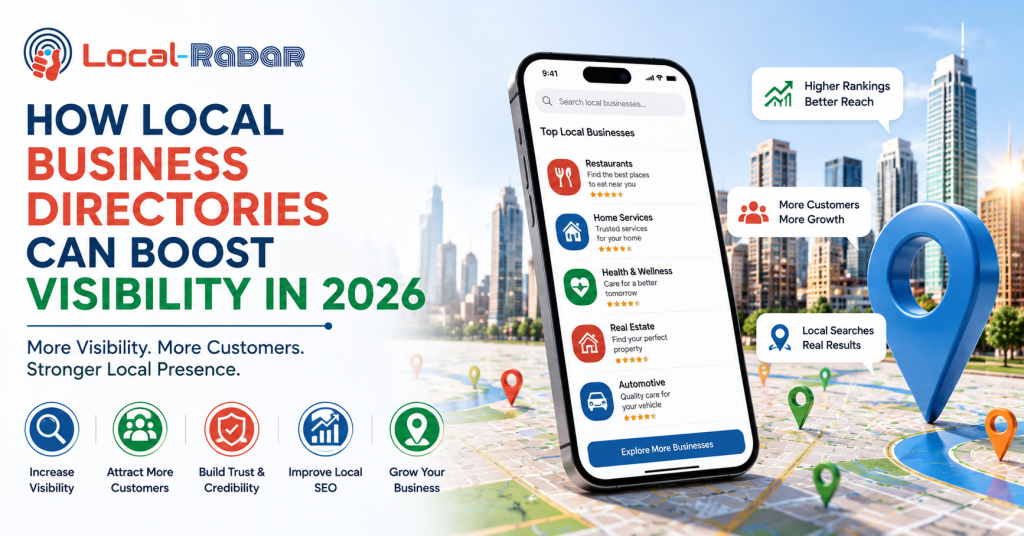
For local businesses, being visible online is no longer optional. Customers increasingly search online before deciding where to eat, shop, book a service, visit a professional, or make a purchase. In 2026, this makes local search visibility an important part of attracting new customers and staying competitive.
While websites, social media, paid advertising, and search engine optimization all have an important role to play, local business directories provide another powerful way for businesses to get discovered.
A well-maintained business directory listing can help customers find essential information about a company while also strengthening its overall online presence. Platforms such as Local Radar give businesses an additional place to showcase their services, location, contact details, categories, and other information to people searching for businesses locally.
What Are Local Business Directories?
A local business directory is an online platform where businesses can create profiles containing important information about their company.
A typical listing may include:
- Business name
- Address and location
- Phone number
- Website
- Business category
- Products or services
- Opening hours
- Business description
- Photos
- Customer reviews
- Service areas
Instead of relying entirely on customers already knowing your business name, directories help introduce your business to people who are searching for a particular product, service, or type of business.
For example, someone might search for “restaurants in Kolkata,” “dentist near me,” “real estate companies in Delhi,” or “digital marketing agency in Mumbai.”
If your business has a complete and relevant local listing, it has another opportunity to be discovered.
Why Local Visibility Matters in 2026
Local search has become increasingly focused on connecting people with businesses that are relevant to their location and needs.
Google explains that local search results are primarily influenced by relevance, distance, and prominence. Complete and accurate business information can help Google understand what a business offers and match it with relevant searches.
This is important because local customers often have strong purchase intent.
Someone searching for “plumber near me” is probably not casually researching plumbing. They may need a plumber immediately.
Someone searching for “restaurants near me” may be deciding where to eat within the next hour.
Someone searching for “property dealers in Kolkata” may already be considering a property transaction.
Local visibility puts your business in front of people who may already be close to taking action.
1. Increase the Number of Places Customers Can Discover You
One of the simplest benefits of business directories is that they create an additional digital presence for your company.
Your website may be the primary destination for your brand, but it does not have to be the only place where customers discover you.
A directory listing can act as another entry point.
Local Radar, for example, is built around helping users search for people, businesses, and places in their city. The platform includes categories covering areas such as food and dining, healthcare, real estate, manufacturing, professional services, personal care, and more.
This creates an opportunity for businesses to appear where people are specifically looking for local products and services.
2. Strengthen Your Local SEO Foundation
Local directories can also contribute to a broader local SEO strategy.
Search engines collect business information from multiple sources across the web. Google states that information used in local search can come from publicly available web content, third-party data, users, and business owners themselves.
This means maintaining accurate information across relevant online platforms is important.
Your business name, address, phone number, website, category, and other details should be consistent and accurate.
However, directory listings should not be treated as a shortcut to guaranteed search rankings. Google does not guarantee better local rankings simply because a business is listed somewhere. Instead, directories should be considered one part of a broader local visibility strategy.
3. Help Customers Find Important Information Faster
Imagine a potential customer discovers your business but cannot find your phone number, opening hours, location, or website.
There is a good chance they will move on to another business.
A complete directory listing solves this problem by putting essential information in one convenient place.
A customer should be able to quickly understand:
What does this business offer?
Where is it located?
When is it open?
How can I contact it?
Where can I learn more?
The easier you make these questions to answer, the less friction there is between discovery and action.
4. Build Trust Before the First Conversation
Customers want reassurance before spending money, particularly when choosing a local business they have never used before.
Business descriptions, photographs, services, website links, and customer reviews can help establish that initial level of trust.
Reviews are particularly valuable because they provide evidence of other customers’ experiences. Google notes that reviews and positive ratings can contribute to a business’s prominence in local search.
Businesses should encourage genuine customers to leave honest feedback and respond professionally to reviews.
A thoughtful response to a positive review can strengthen customer relationships. A professional response to a negative review can demonstrate that the business takes customer concerns seriously.
5. Reach Customers Who Do Not Know Your Brand Name
Traditional marketing often focuses on making people remember a brand.
Local search works differently.
A potential customer may not know which business they want. They simply know what they need.
For example:
“AC repair service near me”
“best salon in my area”
“accountant in Kolkata”
“furniture store near me”
“home renovation company in Delhi”
This is where category-based discovery becomes valuable.
A local directory allows businesses to compete for attention based on what they offer, not only on whether customers already know their name.
That can be particularly useful for smaller businesses competing against established brands.
6. Improve Your Business Information With Local Relevance
A directory profile should clearly communicate both your services and your location.
If you operate a bakery in Kolkata, for example, your business description should naturally explain that you provide bakery products in Kolkata and identify the services or products that make your business different.
Avoid keyword stuffing.
Instead, write descriptions for real customers.
Use relevant categories, provide accurate service information, and explain the areas you serve. This makes your listing more useful while also giving search platforms clearer information about your business.
A strong profile should be informative rather than simply packed with keywords.
7. Support Multiple Customer Journeys
Not every customer follows the same path.
One person may discover your business through a search engine and then visit your website.
Another may discover your listing, look at photos, read reviews, and call immediately.
Someone else may save your business and return later.
This is why a directory listing should be treated as part of the overall customer journey.
Make sure your listing provides the information customers need at each stage. Include a website link, accurate contact information, location details, services, and other useful information whenever the platform allows it.
The goal is to make the next step obvious.
8. Keep Your Listing Updated
Creating a listing and forgetting about it can create problems.
Businesses change. Phone numbers change. Opening hours change. Services are added. Locations move. Websites are redesigned.
An outdated listing can confuse customers and damage trust.
Google recommends keeping business information accurate and up to date because complete and accurate information helps businesses appear for relevant local searches.
Review your directory listings regularly.
Check your:
- Business name
- Phone number
- Address
- Website
- Opening hours
- Categories
- Services
- Photos
- Business description
Keeping these details current helps customers receive the right information when they discover your business.
9. Use Local Directories Alongside Your Website
A directory listing should not replace your website.
Instead, the two should work together.
Your website can provide detailed information about your company, services, products, team, expertise, case studies, and contact options.
The directory listing can introduce potential customers to your business and direct interested visitors toward your website.
Think of it as a network of digital touchpoints.
The more useful and consistent those touchpoints are, the easier it becomes for potential customers to research your business and make a decision.
The 2026 Local Visibility Strategy
Businesses looking to improve local visibility in 2026 should think beyond simply “ranking on Google.”
A stronger strategy combines several elements:
Accurate business information + local directories + website optimization + customer reviews + useful content + strong customer experience.
No single tactic guarantees visibility.
Instead, businesses should build a consistent digital presence that makes it easy for search engines and customers to understand who they are, what they offer, and where they operate.
Local Radar can be part of that strategy by providing businesses with an additional platform for local discovery. Its directory allows users to search for businesses and places across different categories and locations.
Final Thoughts
In 2026, local customers have more choices than ever. Being a good business is important, but being discoverable is equally important.
Local business directories can help expand your digital footprint, introduce your business to new audiences, provide important information, support trust, and create additional opportunities for customer enquiries.
The key is not simply to create as many listings as possible. Focus on relevant directories, accurate information, complete profiles, genuine reviews, and consistent branding.
Your next customer may already be searching for the product or service you provide.
Make sure your business is there when they search.
Get discovered. Build your local presence. Connect with more customers with Local Radar.
