
The Ultimate Local Marketing Strategy: Your Marketing Playbook for 2026
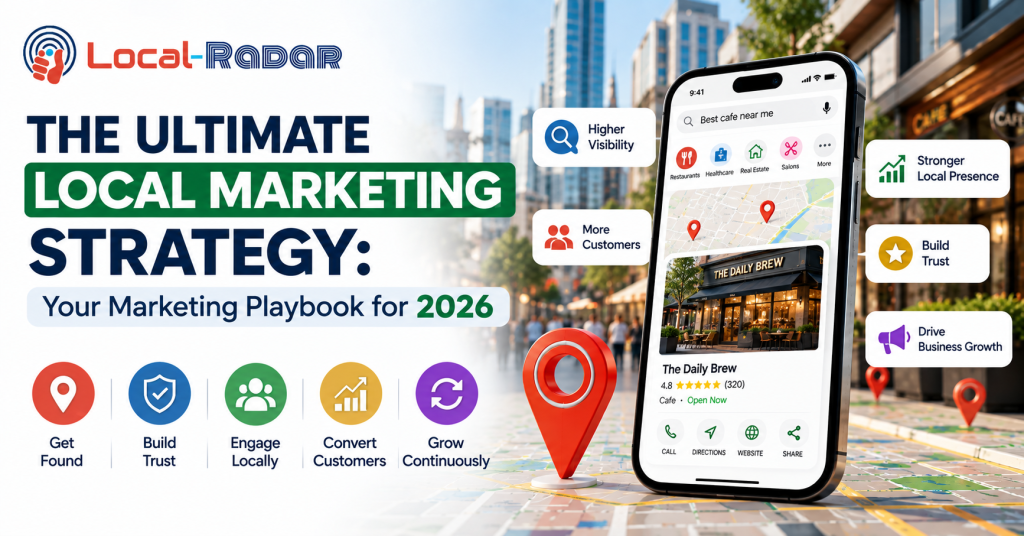
In 2026, local marketing is no longer just about putting your business name on a signboard or running an occasional advertisement. Customers are discovering businesses through search engines, online directories, maps, social media, reviews, websites, and increasingly digital-first experiences.
For local businesses, the challenge is simple: how do you make sure customers can find you when they are looking for what you offer?
The answer is not one single marketing channel. A successful local marketing strategy combines several digital touchpoints into one consistent system.
This is your local marketing playbook for 2026—a practical framework for increasing visibility, building trust, attracting local customers, and turning online discovery into real enquiries.
1. Start With a Strong Local Business Listing
Your local marketing strategy should begin with making your business easy to discover.
A local business listing gives potential customers essential information about your company, including your business name, category, location, contact details, website, services, operating hours, photos, and reviews.
Platforms such as Local Radar allow businesses to create an online presence where people can discover businesses and places in their city. Local Radar covers categories including food and dining, healthcare, retail, education, real estate, professional services, manufacturing, travel, and more.
Think of your business listing as your digital storefront.
Even if a customer has never heard of your company before, a complete listing can help them understand what you offer and decide whether to contact you.
2. Make Your Business Information Accurate
Visibility means little if customers find incorrect information.
Imagine someone discovers your business online but sees an outdated phone number, incorrect opening hours, or an old address. They may simply choose another company.
Google recommends keeping business information complete and accurate because this helps customers understand what a business does, where it is located, and when it can be visited.
Make sure your information is consistent across your website, business directories, social profiles, and other online platforms.
Regularly check:
- Business name
- Address
- Phone number
- Website
- Opening hours
- Business category
- Services
- Service areas
- Photos
Accuracy should be the foundation of your local marketing strategy.
3. Build a Local SEO Strategy
Local SEO helps your business become more relevant to customers searching for products and services in a specific location.
Google states that local search results are primarily influenced by relevance, distance, and prominence. Complete business information helps Google understand how relevant a business is to a search.
Start by identifying the searches your customers are likely to make.
For example:
- Restaurant in Kolkata
- Dentist near me
- Digital marketing agency in Mumbai
- Real estate company in Delhi
- AC repair service near me
- Best salon in Bangalore
Then make sure your website and business profiles clearly communicate your services and locations.
However, avoid keyword stuffing. Your content should be written for customers first.
4. Turn Your Website Into a Local Customer Hub
Your website should support every other part of your marketing strategy.
A customer may discover your business through a directory, search engine, social media post, or advertisement and then visit your website before making a decision.
Your website should therefore answer the questions customers care about:
What do you offer?
Where do you operate?
Why should customers choose you?
How can they contact you?
Create dedicated pages for important services and locations where appropriate. Include clear contact information, calls to action, useful content, customer testimonials, and relevant images.
Your website doesn’t need to be complicated. It needs to be useful.
5. Use Customer Reviews to Build Trust
Local marketing is not just about visibility. It is also about credibility.
Reviews can influence how potential customers perceive your business. Google specifically recommends responding to reviews and notes that positive reviews and helpful replies can help businesses stand out.
Encourage genuine customers to leave honest feedback after a positive experience.
Then respond professionally.
Thank customers for positive reviews and address negative feedback constructively. Avoid arguing publicly or using aggressive responses.
Your review section is not just for existing customers. Future customers are reading it too.
6. Create Content That Answers Local Questions
Content marketing can be a powerful part of your local strategy.
Instead of only promoting your products or services, create content that answers questions your target customers are already asking.
For example, a restaurant could publish:
- Best dishes to try
- Local food guides
- Seasonal menus
- Event dining ideas
A real estate company could publish:
- Local property guides
- Neighbourhood comparisons
- Buying tips
- Market explainers
A healthcare business could create educational content around common questions related to its services.
This type of content can help demonstrate expertise while giving potential customers another reason to discover your business.
7. Don’t Ignore Social Media
Social media and local marketing work particularly well together when content is location-specific.
Instead of simply posting generic promotional graphics, show customers what is happening around your business.
Share:
- New products
- Customer experiences
- Behind-the-scenes content
- Local events
- Team activities
- Special offers
- Helpful tips
- Community involvement
Use location information naturally where it makes sense.
The goal is not to be present on every social platform. Choose the channels where your customers are most likely to engage and focus on creating useful, consistent content.
8. Use Paid Advertising Strategically
Organic visibility takes time. Paid advertising can help businesses reach specific audiences more quickly.
Local businesses can use digital advertising to promote:
- New store openings
- Seasonal offers
- Events
- Product launches
- Limited-time promotions
- Service enquiries
- Local awareness campaigns
The key is targeting.
Instead of advertising to everyone, define your geographic area and customer profile carefully.
A local restaurant does not necessarily need to reach an entire country. A home-service business may only need customers within a practical service radius.
Good local advertising is about reaching the right people—not simply reaching more people.
9. Build a Consistent Brand Everywhere
Imagine seeing one logo and phone number on a directory, different information on Instagram, and another business description on the website.
That inconsistency can create confusion.
Your brand should look and feel consistent across your digital presence.
Keep your:
- Logo
- Business name
- Brand colors
- Description
- Contact details
- Website
- Service information
consistent wherever possible.
This helps customers recognize your business and makes your digital presence feel more professional.
10. Connect Online Marketing With Offline Marketing
Local marketing should not stop at the internet.
Use your online presence to support offline activity and vice versa.
For example, include your website and social media handles on printed materials. Add QR codes to promotional materials when useful. Encourage customers visiting your physical location to review your business online.
If you host local events, promote them digitally. If you participate in a community event, create content around it.
The strongest local brands often connect their digital presence with their physical community.
11. Track What Generates Real Enquiries
Marketing activity is only useful when you understand what it is achieving.
Track actions such as:
- Website visits
- Phone calls
- Form submissions
- Messages
- Direction requests
- Booking requests
- Product enquiries
- New customers
Don’t focus exclusively on likes or follower counts.
A post with fewer likes may generate more enquiries than a post with high engagement.
Your objective should be to identify which channels and content actually contribute to business growth.
12. Create a Repeatable 2026 Marketing Routine
A local marketing strategy becomes much easier when you turn it into a routine.
Every Week
- Publish useful local content
- Check customer reviews
- Share social media updates
- Respond to enquiries
- Check important business information
Every Month
- Review website traffic
- Review leads and enquiries
- Update photos and services
- Analyze advertising performance
- Identify your best-performing content
Every Quarter
- Review your local SEO strategy
- Audit business listings
- Update outdated information
- Review competitors
- Refresh your marketing campaigns
- Identify new local opportunities
Consistency is more valuable than doing everything once and disappearing for six months.
The 2026 Local Marketing Playbook
A practical local marketing system can be summarized as:
Get Found → Build Trust → Engage → Convert → Retain
Get Found: Use local directories, search optimization, social media, and advertising.
Build Trust: Use reviews, useful content, professional branding, and accurate information.
Engage: Communicate regularly through content and social media.
Convert: Make it easy to call, message, visit, book, or enquire.
Retain: Deliver a great customer experience and encourage repeat business and referrals.
This creates a marketing ecosystem rather than relying on one platform.
Final Thoughts
Local marketing in 2026 is about being visible, useful, trustworthy, and easy to contact.
Your customers may discover you through a local directory, find your website through search, check your reviews, look at your social media, and then contact you. Every one of those touchpoints contributes to their decision.
That is why businesses should stop thinking about marketing channels individually and start building a connected local presence.
Local Radar can be one part of that strategy, giving businesses another place to showcase their services and connect with people searching for businesses and places in their city.
Start with accurate information. Build a strong local listing. Optimize your website. Collect genuine reviews. Create useful content. Engage with your community. Track your results—and keep improving.
Your next customer is already looking for something. Make sure your business is easy to find.
Get discovered. Build trust. Grow locally with Local Radar.
